

 2024-10-30
 387
In order to effectively strengthen the Party members' self‑cultivation and ideological and moral development, to comprehensively advance the building of the Party branch, to enhance patriotic education among Party members, to encourage all Party members of our branch to inherit and carry forward the Party's fine traditions and work style, to further strengthen the cohesion of our branch, and to enhance the sense of mission and responsibility among Party members, from October 24 to 26, all Party members of the Party Branch of Asia Pacific Pengsheng Tax Agency Co., Ltd. went to Shaoguan to carry out a red‑education activity themed "Staying True to the Original Aspiration through Party‑Building Guidance, and Opening a New Chapter through Recalling Past Hardships and Appreciating Present Blessings."
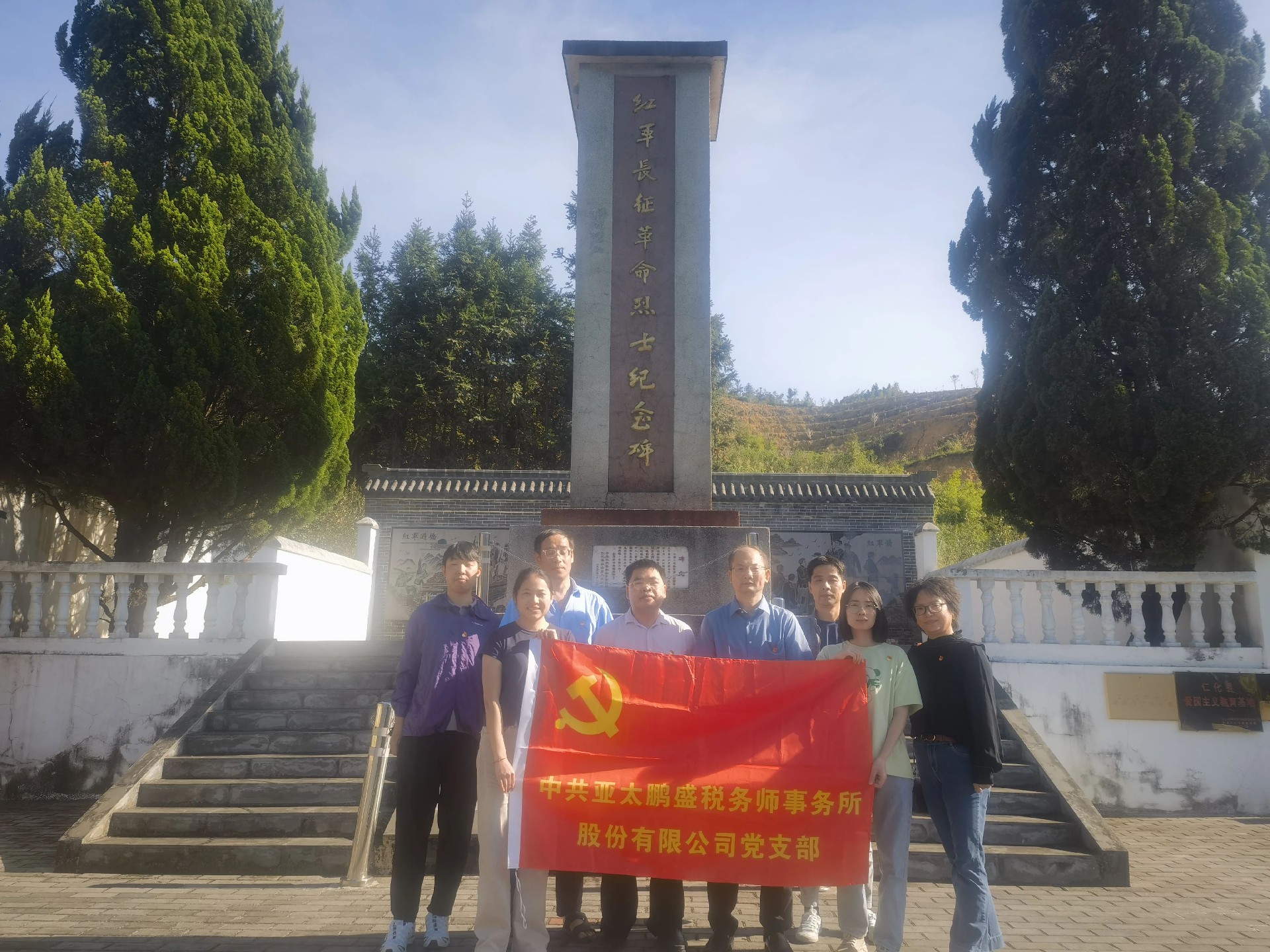
On October 24, we went to Hongshan Town, Renhua County, Shaoguan City, to visit the Hongshan Red Army Long March Revolutionary Martyrs Memorial Park.
The Hongshan Red Army Long March Revolutionary Martyrs Memorial Park is an important red‑education base in Shaoguan City. The park features memorial sculptures and an exhibition hall dedicated to the Red Army's Long March, showcasing the heroic deeds and revolutionary spirit of the Red Army when they passed through Shaoguan during the Long March. Here, we paid tribute to revolutionary martyrs and revisited revolutionary history.
The Red Army Long March Revolutionary Martyrs Monument was built by Hongshan Town to commemorate 36 wounded and sick soldiers who lost their lives when the Red Army passed through Hongshan Town from November 5 to 9, 1934, during the Long March. From October 31 to early November 1934, the main Red Army forces—including parts of the First and Ninth Army Corps, the Military Commission Column, and elements of the Third, Fifth, and Eighth Army Corps—entered the areas of Changjiang and Chengkou in Renhua. Starting November 5, the main Long March contingents gradually entered the Hongshan area. The First Army Corps' direct subordinate unit marched from Chengkou via Weikeng to Xintian for bivouac. From November 6 to 9, the Sixth Regiment of the Second Division and the Fifteenth Division of the First Army Corps, assembled at Baishidong, marched continuously for four days and four nights, crossing Ciba'ao via Wudu Bazi (now the seat of Hongshan Town Government) into Yangjiazi Village, Zhongshan Township (then part of Lechang County, now part of Hongshan Town, Renhua County). The First Army Corps' direct unit, assembled at Xintian, proceeded via Fengshu'ao, Anjing, Dashui, and Qingjiangjiang into Makeng, Lechang County. The Red Army's Long March route through the Hongshan area passed through six village committees—Xinbai, Qingjing, Xinshan, Zhongshan, Qiandong, and Yuhuang—covering 34 natural villages. Small detachments rested and camped in many of these villages. Along the Hongshan section, a total of 47 wounded and sick Red Army soldiers fell behind; 32 were killed by the enemy, and 12 died due to lack of medical care—all were buried on the spot by local villagers. In 1968, during the "three‑in‑one" revolutionary movement, the remains of 36 Red Army soldiers buried within Xinbai's jurisdiction were relocated and laid to rest together at Chatougeng, where the "Revolutionary Martyrs Monument" was erected.
In June 1989, the Renhua County People's Government designated the "Revolutionary Martyrs Monument" as a county‑level cultural relic protection unit. Every Qingming Festival, staff from government agencies and teachers and students from schools hold tomb‑sweeping ceremonies there to honour the deceased and express their remembrance, while also conducting patriotic education. In December 2015, it was listed as a Renhua County Patriotism Education Base.
All Party members, guided by Lian Huijuan, a village‑based cadre and Party member of Hongshan Town, followed the Long March path of the martyrs, paid tribute to the 36 unknown heroes, and revisited revolutionary history.
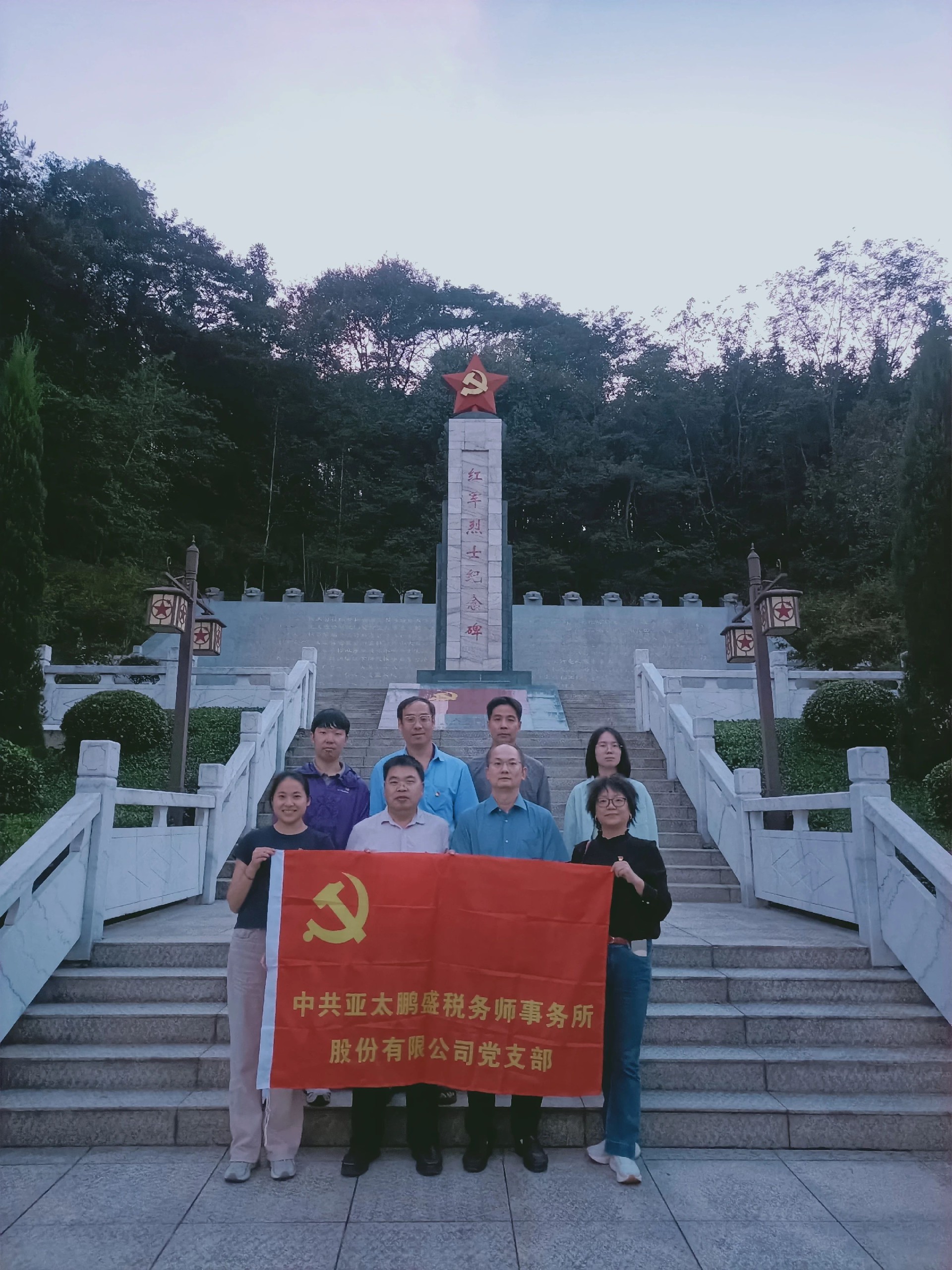
On the morning of October 25, we visited the Tongguling Red Army Martyrs Memorial Park.
In November 1934, after the main Red Army forces captured Chengkou and successfully broke through the second blockade line, the Kuomintang reactionaries advanced from Renhua County town toward Chengkou, gathering at the southern foot of Tongguling. They occupied high ground, held the passes, and built fortifications, posing a serious threat to the main Red Army forces as they passed through Chengkou into southern Hunan. From November 4 to 5, a detachment of the Sixth Regiment of the Second Division tenaciously resisted the enemy at Tongguling. At the cost of over 100 casualties, the Red Army crushed the enemy's attempt to reinforce Chengkou, creating conditions for the main Red Army forces to rest briefly in Chengkou and continue westward.
The Tongguling Red Army Martyrs Memorial Park was built on the site of the "Red Army Martyrs Monument" completed in 2008, through an upgrade project that lasted over two years (initiated in April 2017 and completed in September 2019). The upgrade added eight themed sculptures, including red‑sandstone carvings of the Red Army's passage through northern Guangdong, an octagonal‑hat array, and trench site landscapes, as well as boardwalks, battlefield platforms, viewing platforms, tourist restrooms, landscaping, and lighting. The trench sites were also restored.
On April 21, 2011, the Tongguling Red Army Martyrs Monument (Chengkou Town Red Army Martyrs Monument) was announced as a county‑level key cultural relic protection unit by the Renhua County Government. In 2016, it was selected by Guangdong Province to feature on the commemorative postage postcard for the "80th Anniversary of the Victory of the Chinese Workers' and Peasants' Red Army Long March" and was named one of "The Long March Memorial Sites in My Heart." In December 2016, it was named a "Revolutionary Tradition Education Base" by the Guangdong Provincial Corps of the Chinese People's Armed Police Force. In April 2017, it was named a "Patriotism Education Base" by the Shaoguan Municipal Spiritual Civilization Construction Committee and the Propaganda Department of the CPC Shaoguan Municipal Committee. In September 2017, it was named a "Shaoguan Social Science Popularisation Base" by the Propaganda Department of the CPC Shaoguan Municipal Committee and the Shaoguan Federation of Social Sciences. In November 2017, it was named a "Guangdong Provincial National Defence Education Base" by the Propaganda Department of the CPC Guangdong Provincial Committee and the Guangdong Provincial National Defence Education Leading Group. In December 2017, it was named a "Shaoguan National Defence Education Base" by the Shaoguan National Defence Education Leading Group Office. In April 2019, it was announced as a "Shaoguan CPC History Education Base" by the Party History Research Office of the CPC Shaoguan Municipal Committee. In August 2019, it was announced as a "Guangdong Provincial CPC History Education Base" by the Party History Research Office of the CPC Guangdong Provincial Committee. In March 2020, it was announced as a "Shaoguan Patriotism Education Base" by the Shaoguan Municipal Spiritual Civilization Construction Committee and the Propaganda Department of the CPC Shaoguan Municipal Committee.
All Party members saluted the more than 100 Red Army soldiers who sacrificed their lives in the Tongguling battle.
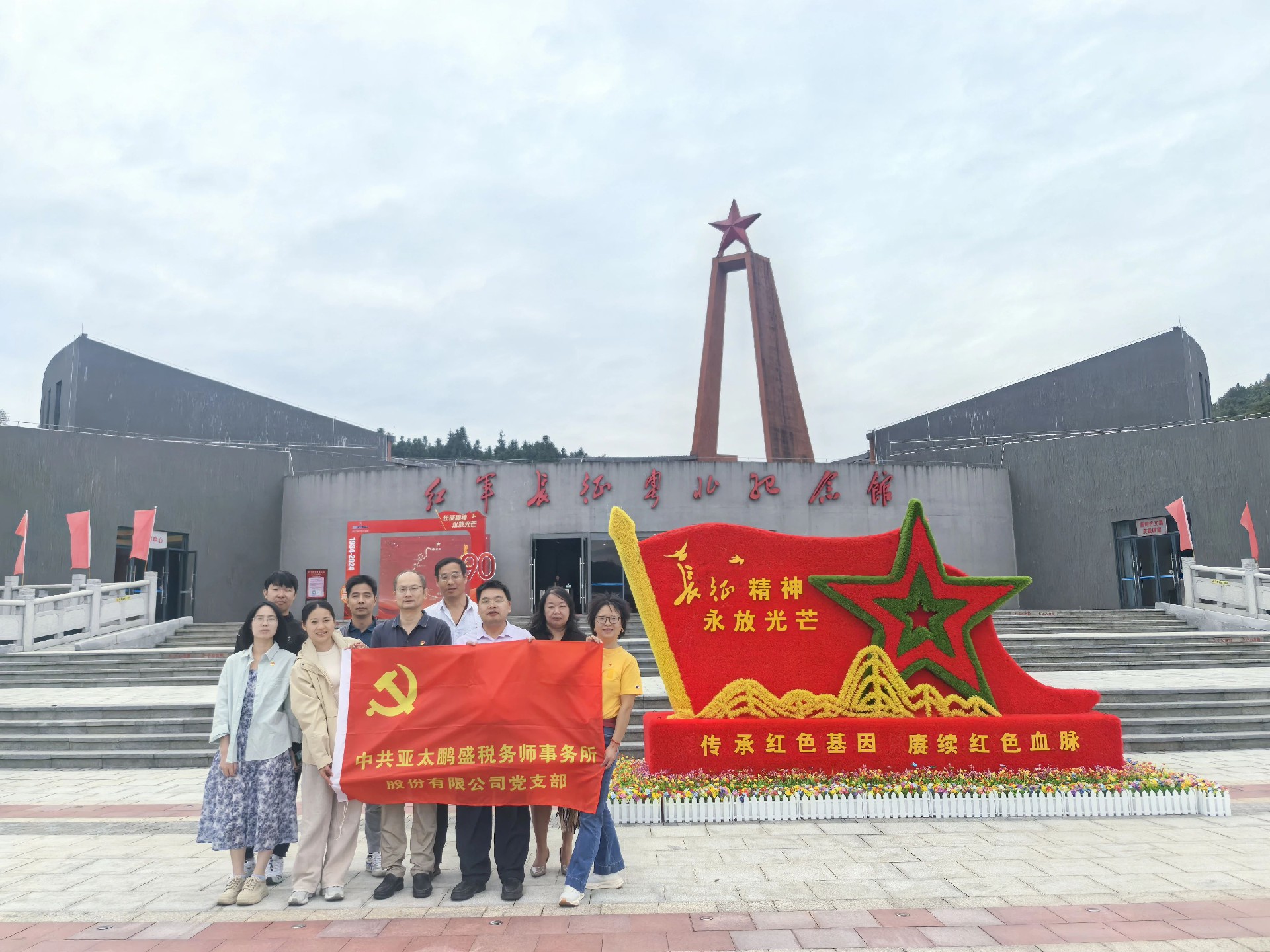
On the afternoon of October 25, we visited the Red Army Long March Northern Guangdong Memorial Hall. Following the Long March route, we experienced the hardships of the Long March, recalled the heroic years of the past, and reflected on how hard‑won today's prosperity truly is.
The Red Army Long March Northern Guangdong Memorial Hall covers a planned area of 19.02 mu (12,680.06 square metres), with a total building area of 5,500 square metres. It is a two‑storey building, with each floor 5.8 to 6 metres high, comprising an entrance hall, exhibition halls, a collection storage room, a lecture hall, a multimedia centre, and a memorial square. The memorial hall is designed with a circular form as the main architectural composition. The overall base rises step by step, and the roof layers ascend progressively, creating an upward and forward momentum that embodies a spirit of positive striving and progress. This design resonates with the great Long March spirit of fearing no difficulties or hardships and being willing to sacrifice everything to save the nation and its people.
The memorial hall is divided into five sections and 18 units. The thematic exhibition, "The Long March · Breakthrough in Northern Guangdong," comprehensively presents the history of the main Red Army forces—including the remnants of the Nanchang Uprising troops, the Fourth Red Army, the Fifth Red Army, the Third Army Corps, and the Seventh Red Army—as they fought their way through northern Guangdong, passing through Nanxiong, Renhua, and Lechang, successively breaking through three enemy blockade lines. It also covers the history of the Red Army and guerrilla forces that remained on the Jiangxi‑Guangdong border, persisting in a gruelling three‑year guerrilla war under extremely difficult conditions, and highlights the deep bond between the people of northern Guangdong and the Red Army, as they actively supported the troops.
The main building of the Red Army Long March Northern Guangdong Memorial Hall uses "breaking through the blockade" as its iconic symbol, featuring a monumental red five‑pointed star at its peak. It stands like a spark of red fire embedded in the green hills and blue waters of northern Guangdong, inspiring us to carry forward the great Long March spirit and to walk today's Long March path well.
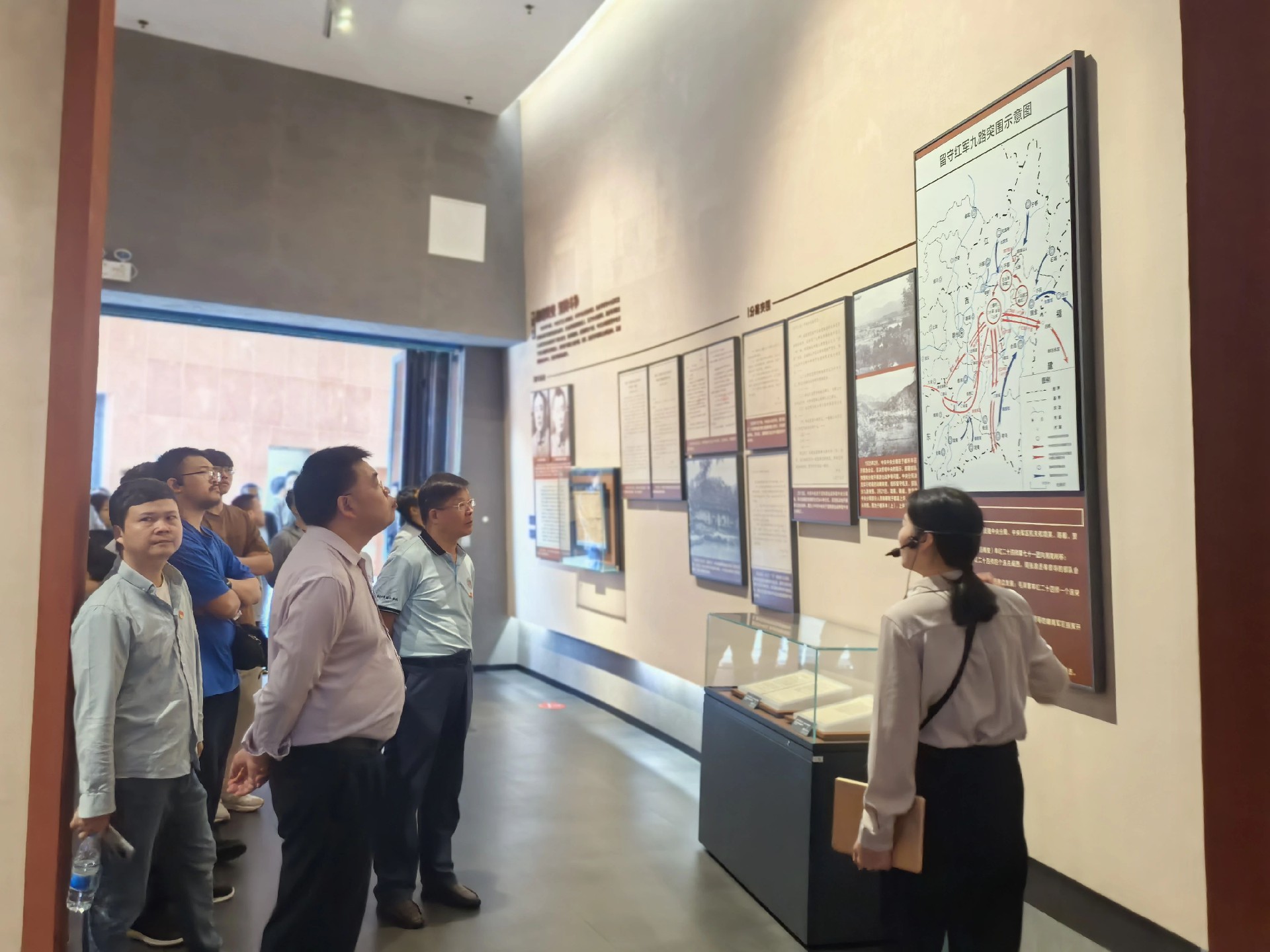
Under the guidance of the tour guide, we visited the memorial hall and watched the themed short film "The Long March · Breakthrough in Northern Guangdong."
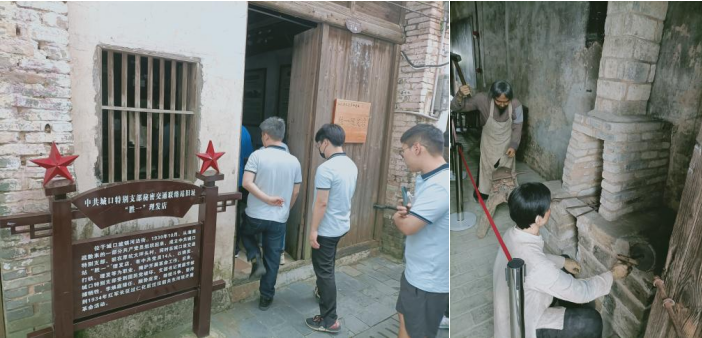
After visiting the Northern Guangdong Memorial Hall, we crossed a river and arrived at the Red Army Street in Chengkou Town. The three streets—Zixia, Zhenglong, and Hebian—are the main thoroughfares of Chengkou and were once its busiest commercial streets. Among them were the "Shengyi" barbershop and a blacksmith's forge, which served as secret liaison stations for the CPC Special Branch in Chengkou. Today, these secret stations remain intact, as if constantly telling passers‑by the red‑story tales of that era. It is for this reason that the three streets are now affectionately called Red Army Street by the local people.
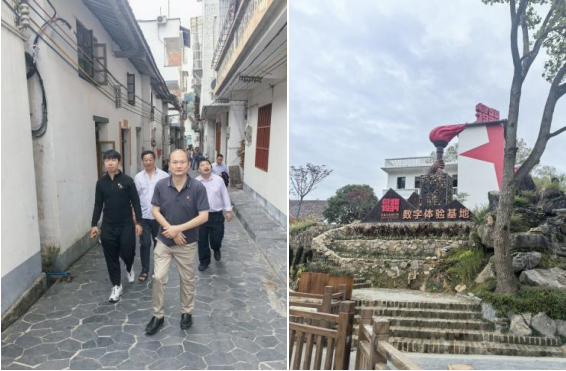
On the morning of October 26, the group visited Yangjiazhai, a famous revolutionary village, and revisited the key battlefield where Zhu De’s troops seized Yizhang County by stratagem.
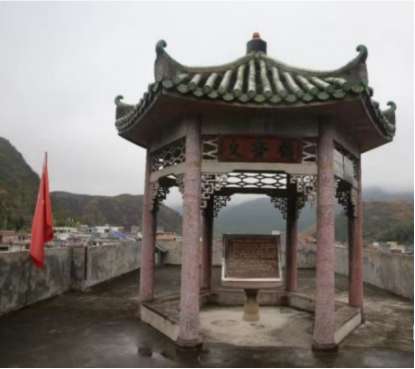
Yangjiazhai Village is a well-known ancient revolutionary village. During the Agrarian Revolutionary War, the Hunan-Guangdong Border Working Committee, the Southern Hunan Special Committee and the Hunan-Guangdong Border Red Guerrilla Corps carried out underground revolutionary activities here for a long time. In January 1928, Zhu De and Chen Yi led the remaining troops of the Nanchang Uprising to plot the Southern Hunan Uprising and stationed here for several days. In February 1931, Deng Xiaoping and Li Mingrui led the Seventh Red Army to hold meetings and recuperate the wounded in this village, receiving wholehearted support from the local people. For these reasons, Yangjiazhai has gone down in history forever.
Wenkui Tower in Yangjiazhai
This Party building activity was short in terms of travel time, yet our revolutionary faith will last forever. Filled with deep respect for revolutionary history and high spirits, all Party members returned to Shenzhen.
This red education activity further strengthened the patriotism of all full and probationary Party members, enhanced team cohesion and fighting capacity, and encouraged Party members to play an exemplary leading role.All participants agreed that living in a prosperous era means shouldering heavy responsibilities. They will stay true to the original aspiration and mission, strengthen ideals and convictions, carry forward the great Party-building spirit and fulfill the Party’s fundamental purpose. With greater enthusiasm and vigour, they will devote themselves to promoting high-quality development of the industry, and write new chapters of loyalty to the Party, dedication to the country and service to the people.





 Official WeChat
 Official WeChat
